New Puppy Safety at Home: How to Protect Your Puppy from Dangerous Small Objects and Human Food
Bringing a new puppy home feels magical.
Tiny paws. Curious eyes. Endless energy.
But along with the cuteness comes responsibility.
Puppies explore the world with their mouths. If something fits, they try to chew it. If it smells interesting, they try to swallow it. This natural behavior often leads to accidents inside the home.
Many puppy emergencies happen because of small household objects and unsafe human foods.
The good news?
Most of these accidents are completely preventable.
This guide explains how to puppy-proof your home, what items to remove, which foods are dangerous, and how to build safe habits from day one.
Let’s keep your puppy safe, healthy, and happy.
Why Puppies Put Everything in Their Mouth
Chewing also helps puppies:
Puppies go through a teething phase between 3 and 6 months of age. During this time, their gums feel uncomfortable, so chewing provides relief.
- Explore their environment
- Reduce stress
- Learn textures and shapes
According to the American Kennel Club (AKC), chewing is a normal developmental behavior in puppies, not bad behavior.
However, normal behavior becomes dangerous when unsafe objects are available.
Understanding this instinct helps you manage it instead of fighting it.
The Real Dangers of Small Objects
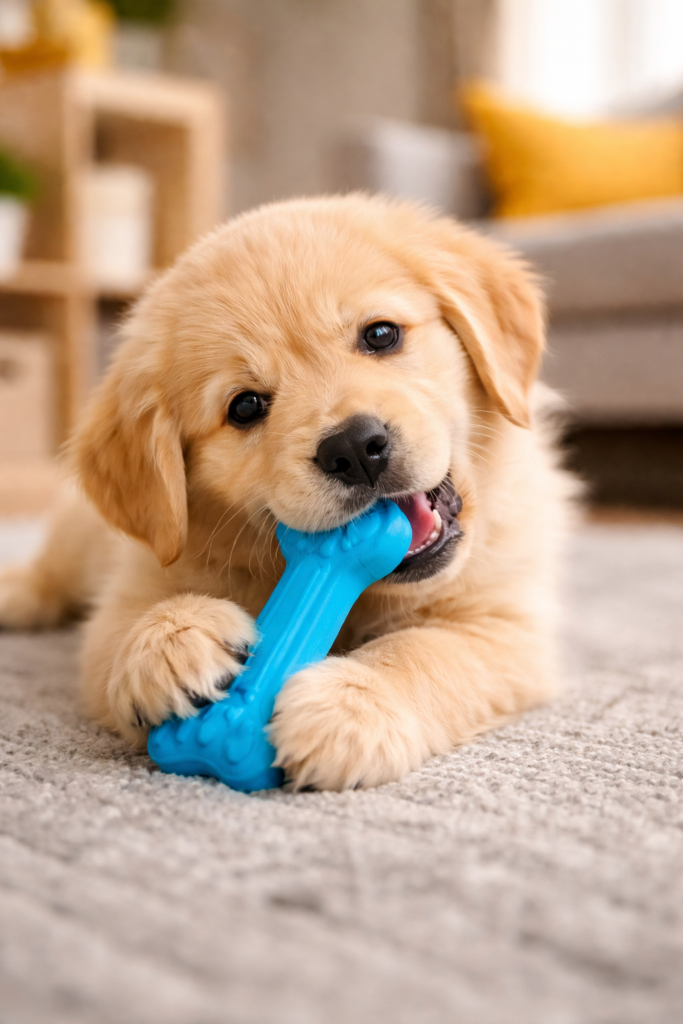
Small objects pose three major risks:
1. Choking
Objects can block the airway, making breathing impossible.
2. Intestinal Blockage
If swallowed, objects may get stuck in the stomach or intestines. Blockages often require emergency surgery.
3. Toxic Exposure
Some items contain chemicals that poison dogs when chewed.
Veterinary hospitals frequently treat puppies for foreign body ingestion. The ASPCA Animal Poison Control Center reports thousands of cases each year related to household hazards.
This problem is more common than most new owners realize.
Common Household Items Puppies Swallow
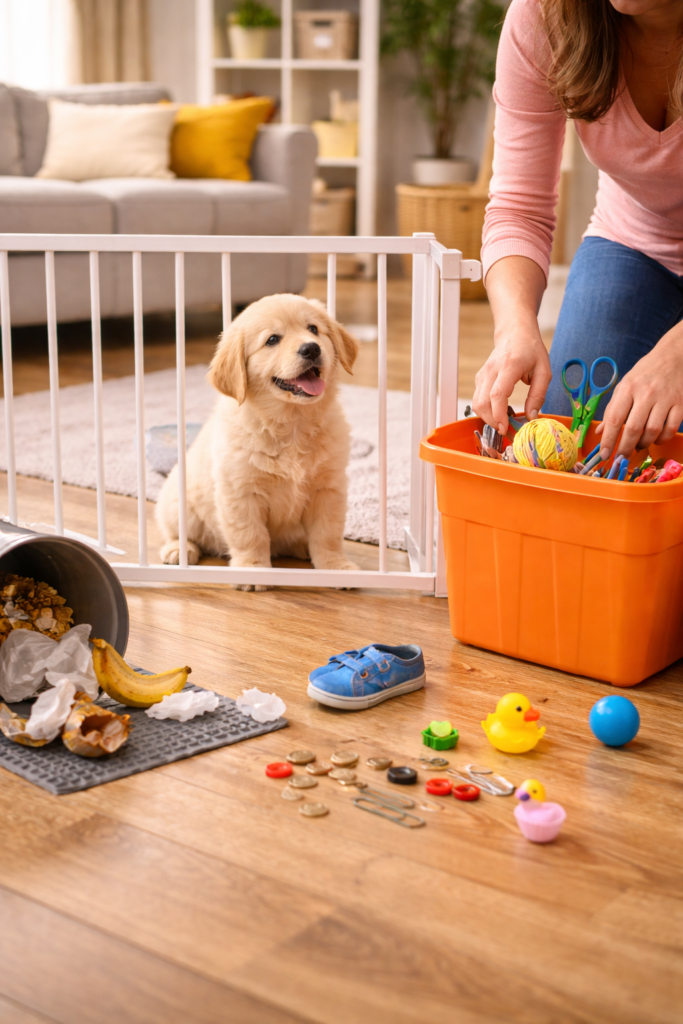
Walk around your home and look at the floor level.
If you spot any of these, move them immediately:
- Coins
- Buttons
- Hair ties and rubber bands
- Paper clips
- Small toys
- Socks
- Underwear
- Jewelry
- Batteries
- Sewing needles and pins
- Plastic wrappers
If it fits in your puppy’s mouth, it becomes a risk.
A good rule:
If a toddler could choke on it, a puppy probably can too.
Why Puppies Love Socks (And Other Weird Things)
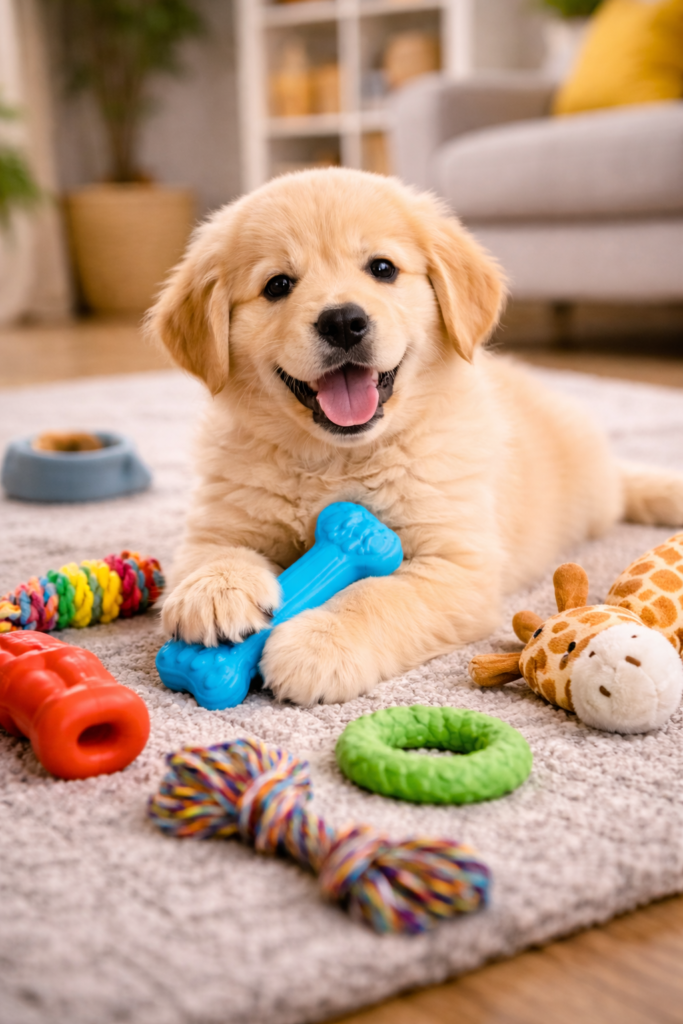
Puppies love items that smell like you.
Socks, shoes, and clothes carry your scent, which makes them comforting and irresistible.
Your puppy does not want to destroy your sock collection.
They simply want to feel close to you.
Cute reason. Dangerous outcome.
Keep laundry in closed hampers and shoes in cabinets.
How to Puppy-Proof Your Home
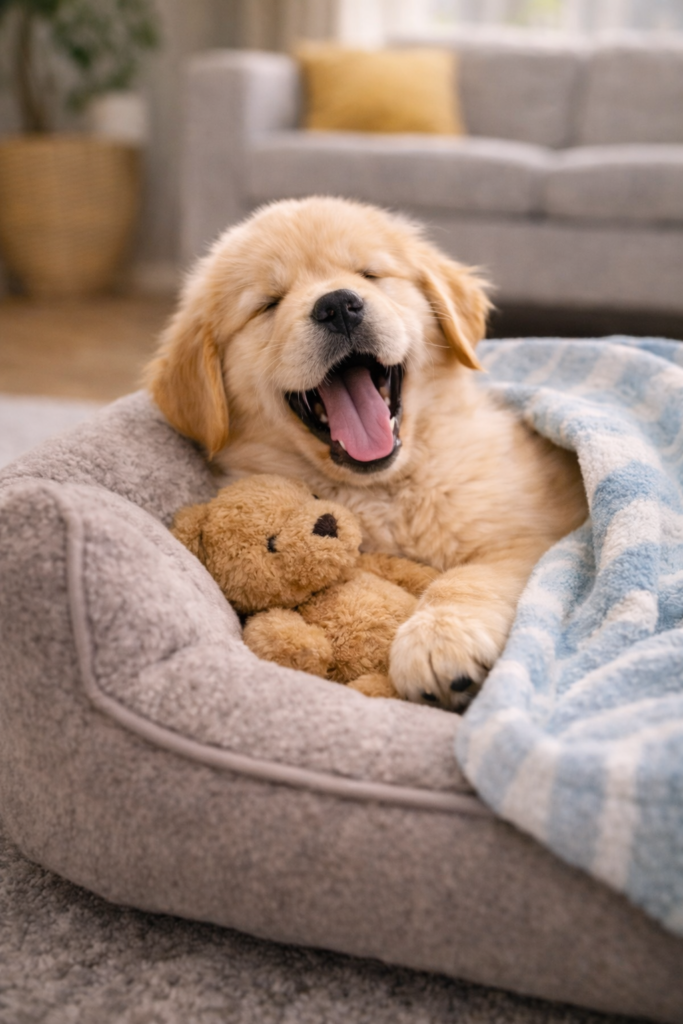
Think like a puppy.
Get down to their eye level and scan the room.
Then take these steps:
Store Items in Closed Containers
Use bins with lids for toys, craft supplies, and tools.
Secure Trash Cans
Use trash cans with locking lids or keep them inside cabinets.
Hide Electrical Cords
Use cord covers or run cables behind furniture.
Block Unsafe Areas
Use baby gates to restrict access to kitchens, storage rooms, and garages.
Keep Floors Clean
Vacuum and sweep daily, especially if children live in the house.
Puppy-proofing is not a one-time job.
Make it a daily habit.
Safe Chew Alternatives for Puppies
Puppies need legal chewing outlets.
Otherwise, they create their own.
Offer:
- Rubber chew toys (KONG-style toys)
- Nylon chew bones designed for puppies
- Teething toys that can be frozen
- Soft rope toys
Choose toys labeled specifically for puppies.
Avoid toys that break into small pieces.
Rotate toys every few days to keep them interesting.
A bored puppy becomes a creative troublemaker.
The Big Mistake: Sharing Human Food
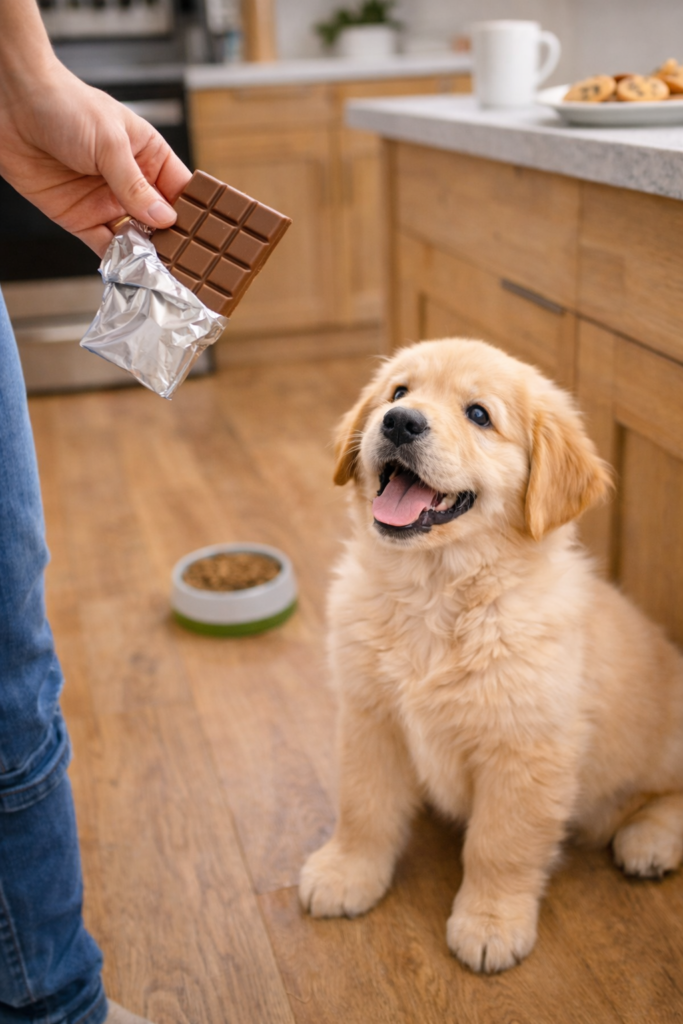
Many people think:
“It’s just a small bite.”
That small bite can cause big problems.
Dogs digest food differently than humans. Some foods that seem harmless can seriously harm puppies.
Never assume a food is safe unless you verify it.
Human Foods That Are Dangerous for Puppies
According to the ASPCA and veterinary toxicology research, the following foods are unsafe:
Chocolate
Contains theobromine, which dogs cannot process well. Dark chocolate is especially dangerous.
Grapes and Raisins
Can cause kidney failure, even in small amounts.
Onions and Garlic
Damage red blood cells and lead to anemia.
Xylitol (Artificial Sweetener)
Found in sugar-free gum, candy, and baked goods. Causes rapid insulin release and liver failure.
Alcohol
Depresses the nervous system and can be fatal.
Caffeine
Found in coffee, tea, and energy drinks. Causes heart and nervous system problems.
Cooked Bones
Can splinter and puncture internal organs.
These are not “sometimes foods.”
They are never foods.
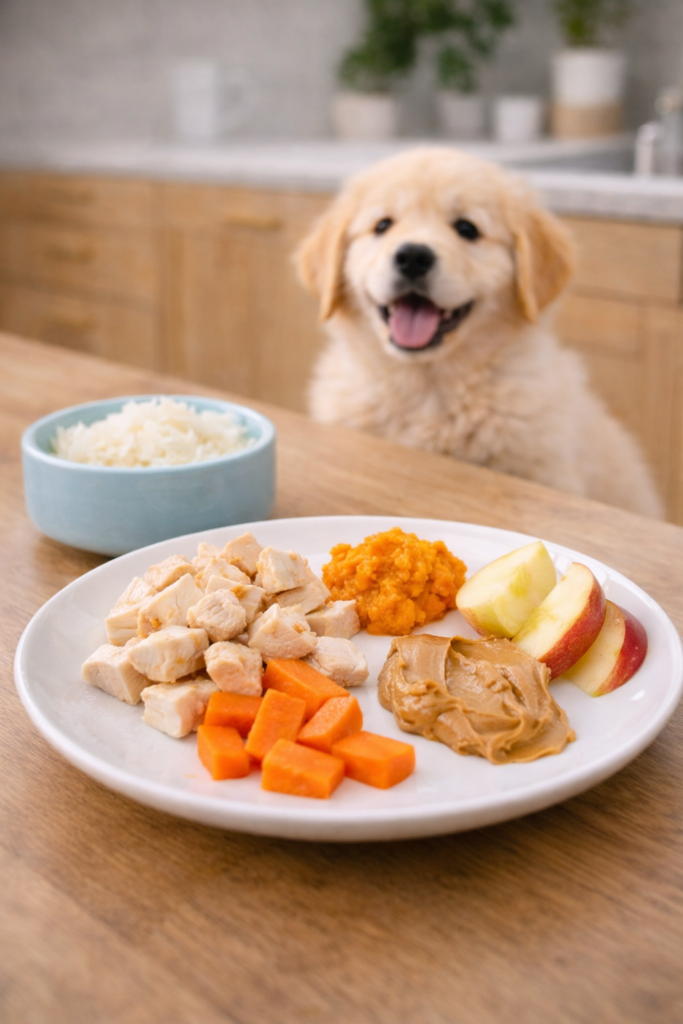
Foods That Are Safe in Small Amounts
Some human foods can be safe when prepared properly:
- Plain cooked chicken (no seasoning)
- Plain rice
- Plain pumpkin
- Carrots
- Apple slices (no seeds)
- Peanut butter (xylitol-free)
Even safe foods should remain occasional treats.
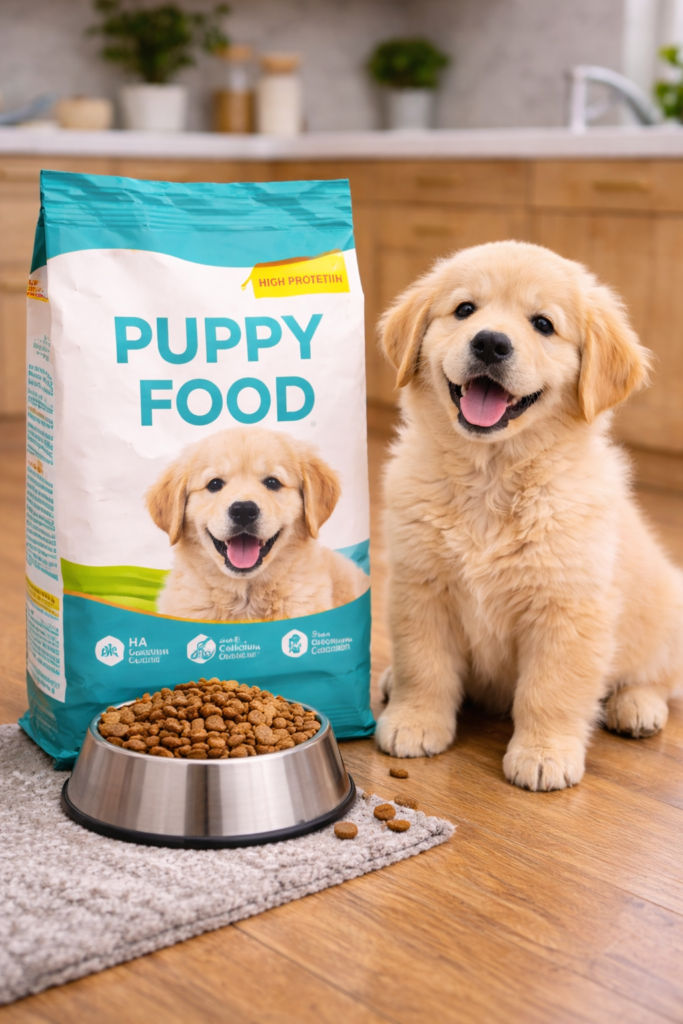
Your puppy’s main nutrition should come from a complete and balanced puppy food.
Why Puppy-Specific Food Matters
Puppies grow fast.
They need higher levels of:
- Protein
- Fat
- Calcium
- Phosphorus
Foods labeled “complete and balanced for growth” meet standards set by the Association of American Feed Control Officials (AAFCO).
Using puppy-formulated food supports:
- Bone development
- Brain development
- Immune function
Adult dog food does not meet these needs.
Feeding Habits That Prevent Problems
Good habits protect your puppy long-term.
Feed on a Schedule
Set meal times instead of free-feeding.
Pick Up Bowls After Meals
Leaving food out encourages scavenging.
Do Not Feed from Your Plate
Once you start, begging becomes permanent.
Teach “Leave It”
This simple command can save your puppy’s life.
Training beats yelling every time.
What to Do If Your Puppy Swallows Something
Stay calm.
Panicking does not help your puppy.
Call Your Veterinarian Immediately
Explain what was swallowed and when.
Do Not Induce Vomiting Unless Told
Some objects cause more damage coming back up.
Watch for Warning Signs
- Vomiting
- Lethargy
- Loss of appetite
- Abdominal pain
- Straining to poop
If you notice any of these, seek emergency care.
Time matters.
Why Supervision Is Non-Negotiable
Young puppies should not roam freely.
Use:
- Crates
- Playpens
- Baby gates
These tools are not punishment.
They are safety equipment.
A supervised puppy stays alive longer. That sounds blunt, but it is true.
Creating a Puppy-Safe Routine
Consistency builds safety.
Daily checklist:
- Quick floor scan
- Toys in good condition
- Trash secured
- Food stored properly
- Doors and gates closed
This routine takes five minutes.
It prevents months of heartbreak.
Light Humor Break (Because Puppies Are Chaos)
Puppies believe:
Every sock is a chew toy. Every crumb belongs to them. Every forbidden object tastes better.
They are adorable criminals.
Your job is to outsmart them with organization.
You can do this.
Trusted Sources and Veterinary Guidance
The information in this article aligns with guidance from:
- American Kennel Club (AKC)
- ASPCA Animal Poison Control Center
- Association of American Feed Control Officials (AAFCO)
- VCA Animal Hospitals
- Merck Veterinary Manual
These organizations base recommendations on veterinary research and clinical experience.
Always consult your veterinarian for personalized advice.
Final Thoughts: Prevention Beats Treatment
Emergency vet visits cost money.
They also cause stress, fear, and pain.
Most puppy accidents inside the home happen because of simple oversights.
A sock on the floor. A chocolate bar on the table. A trash can without a lid.
Small changes create massive protection.
Puppy-proof your home. Feed responsibly. Supervise consistently.
Do this, and your puppy will grow into a healthy, happy adult dog.
And that is the real goal.